Top 10 Mini AI desktop PCs
The desktop computing landscape has undergone a radical transformation over the last two years. As we move through 2026, the "AI PC" is no longer a futuristic concept or a marketing buzzword; it is the industry standard. For professionals, creators, and developers, the shift from cloud-dependent AI to local execution has necessitated a new breed of hardware. The demand for Mini AI PCs—ultra-compact machines capable of 40+ TOPS (Trillions of Operations Per Second)—has skyrocketed.

Our picks at a glance10 products





These pint-sized powerhouses allow users to run Large Language Models (LLMs), generate high-resolution stable diffusion images, and manage complex data automation without sending sensitive information to a remote server. By leveraging dedicated Neural Processing Units (NPUs), these machines offer lower latency, enhanced privacy, and significant energy savings.
In this guide, we explore the top 10 mini AI desktop PCs available in 2026, evaluated on their NPU architecture, thermal efficiency, and ability to handle the rigorous demands of modern artificial intelligence.
Apple Mac Studio (M4 Ultra Edition)

The 2026 iteration of the Mac Studio remains the gold standard for compact AI performance. With the M4 Ultra chip, Apple has doubled down on its Neural Engine, providing a specialized architecture that excels in transformer-based models. The unified memory architecture—now reaching up to 256GB in the highest configurations—is the Mac Studio’s secret weapon.
Because LLMs require massive amounts of VRAM, the Mac Studio’s ability to share its entire memory pool with the GPU and NPU makes it one of the few "mini" computers capable of running 70B parameter models at high speeds. It is the preferred choice for creative professionals using Adobe’s generative AI tools and developers building for the Apple ecosystem.
Geekom A10 (AMD Ryzen AI 9 HX 370)
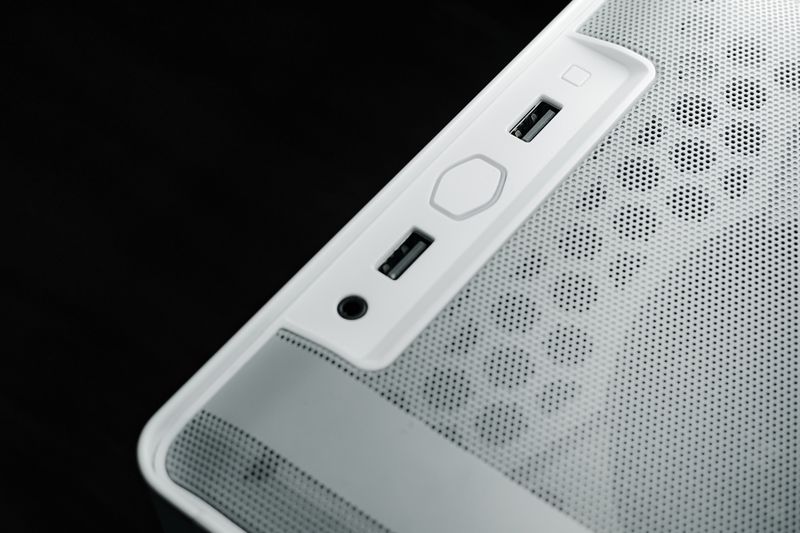
Geekom has solidified its position in the market by being one of the first to fully integrate the AMD Ryzen AI 300 series "Strix Point" processors into a sub-liter chassis. The A10 model features an XDNA 2 NPU that delivers over 50 TOPS of dedicated AI performance.
This machine is particularly impressive for its balance of price and power. The Radeon 890M integrated graphics provide enough auxiliary compute to support the NPU during intensive tasks like real-time video upscaling. For users who need a Windows-based AI workstation that fits in the palm of their hand, the A10 offers unmatched efficiency and a robust port selection, including dual USB4 ports for external GPU expansion.
ASUS ROG NUC 15

Following its acquisition of the NUC line, ASUS has pivoted the brand toward high-performance AI gaming and development. The ROG NUC 15 is slightly larger than a standard NUC but packs an incredible punch with the Intel Core Ultra 9 (Series 2) processor and an enthusiast-grade NVIDIA RTX 50-series mobile GPU.
While the Intel NPU handles background tasks like eye tracking and noise cancellation, the NVIDIA GPU takes over for heavy AI workloads like training small-scale models or running 3D generative AI workflows. Its modular design allows for easy RAM upgrades, which is essential as AI applications continue to grow more memory-intensive in late 2026.
Minisforum UM890 Pro

Minisforum has built a reputation for pushing the limits of thermal management in small form factors. The UM890 Pro utilizes a specialized liquid metal cooling system to keep its AMD Ryzen AI processor running at peak clock speeds during sustained AI inference.
What sets the UM890 Pro apart is its OCuLink port. This allows users to connect an external AI accelerator or GPU at much higher speeds than USB4, effectively turning this mini PC into a desktop-class AI workstation when docked at a desk. It is a favorite among researchers who need a portable machine that can be "supercharged" for heavy duty crunching.
HP Z2 Mini G10 (2026 Refresh)

The HP Z2 Mini G10 is the enterprise-grade choice for AI. Unlike consumer models, the Z2 Mini is ISV-certified, ensuring that professional AI-driven software in the medical, engineering, and architectural fields runs with absolute stability.
The 2026 refresh incorporates the latest Intel "Arrow Lake" vPro processors, which offer enhanced security features for local AI deployments. This is the machine for corporations that want to implement local AI assistants for their employees while maintaining strict data sovereignty and hardware-level encryption.
Lenovo ThinkCentre M90q Gen 5

Lenovo’s Tiny series has long been a staple of the office environment, but the Gen 5 model is built specifically for the "AI-Enhanced Workspace." It focuses on silent operation and reliability. Featuring the latest Intel Core Ultra silicon, the M90q is designed to run 24/7 as an edge AI node.
Many businesses are using the M90q to manage local computer vision for office security or to run local instances of proprietary LLMs for document processing. Its "ThinkShield" security suite has been updated for 2026 to protect AI weights and local data stores from emerging cyber threats.
Beelink SER9 (The Silent AI)

Beelink has solved one of the biggest complaints regarding mini PCs: fan noise. The SER9 uses a redesigned vapor chamber and a large, slow-spinning fan that keeps the AMD Ryzen AI processor cool even during long LLM prompting sessions.
The SER9 is marketed toward writers and researchers who need a silent environment. Despite its quiet nature, it doesn't compromise on performance, offering 50+ TOPS via the NPU. It’s an excellent example of how AI hardware is becoming more refined and less intrusive in a home office setting.
MSI Cubi N Pro (Intel Core Ultra 5)

Not every user needs to train a model; many just need to "run" one. The MSI Cubi N Pro is a budget-friendly entry into the AI PC world. By utilizing the Intel Core Ultra 5, it provides the necessary NPU hardware to meet Microsoft’s Copilot+ requirements without the high price tag of flagship models.
It is incredibly power-efficient, often drawing less than 30W under load. This makes it a perfect candidate for a dedicated "Home AI Hub," where the PC stays on to manage smart home automation, local file indexing, and basic AI-assisted scheduling.
Azulle Inspire (Fanless AI Edition)
For industrial environments or sterile medical settings, the fanless Azulle Inspire is a standout. It utilizes a passive cooling chassis to house an Intel Core Ultra processor. In 2026, achieving high-TOPS performance without a fan is a significant engineering feat.
Because it has no moving parts, the Inspire is immune to dust buildup, making it the top choice for AI-driven manufacturing analytics or edge computing in harsh environments. It proves that mini AI PCs are not just for the desk, but for the field.
Dell OptiPlex Micro Plus (7000 Series)

The Dell OptiPlex Micro Plus rounds out the list with its legendary "ProSupport" and deployment tools. The 2026 model features a highly optimized BIOS that allows users to prioritize power delivery to the NPU or the GPU depending on the specific AI workload.
Dell’s Optimizer software uses the on-board AI to learn user habits, making the PC faster and more responsive over time. For IT departments deploying thousands of units, the OptiPlex’s ability to be managed remotely while providing local AI power to every employee is a winning combination.
Choosing the Right Mini AI PC for Your Needs

Selecting the best mini AI PC in 2026 requires looking beyond traditional clock speeds. You must consider the specific requirements of the AI models you intend to run.
- Memory is King: If you plan on running local LLMs (like Llama 3.5 or Mistral), prioritize RAM. Aim for at least 32GB, though 64GB is the sweet spot for 2026.
- TOPS Ratings: Ensure the NPU meets the minimum requirement for your operating system's AI features. Currently, a 40 TOPS NPU is the baseline for a "next-gen" AI experience.
- Thermal Management: Mini PCs are prone to throttling. Look for models with advanced cooling like vapor chambers or liquid metal if you plan on doing sustained AI image generation or video editing.
- Expansion Options: Since AI technology moves fast, having a USB4 or OCuLink port ensures that you can add more compute power in the future via an external accelerator.
The Future of Compact Computing
The rise of the Mini AI PC represents a shift in how we think about computing power. We are moving away from massive, power-hungry towers and toward efficient, intelligent silicon that fits in a desk drawer. As NPU architectures continue to evolve, the gap between the "mini" and the "full-sized" desktop will continue to shrink.
In 2026, your desktop's intelligence is no longer determined by how loud its fans spin, but by how many trillions of operations it can perform per second. Whether you are a developer building the next great neural network or a business professional looking to automate your workflow, there has never been a better time to invest in a mini AI desktop. These ten machines represent the pinnacle of engineering in the small form factor space, proving that the most powerful brains often come in the smallest packages.
Where to buy
Prices change often, so check the current deal before you buy.
- Apple Mac StudioSee current deal ↗
- Geekom A10See current deal ↗
- ASUS ROG NUC 15See current deal ↗
- Minisforum UM890 ProSee current deal ↗
- HP Z2 Mini G10See current deal ↗
- Lenovo ThinkCentre M90q Gen 5See current deal ↗
- Beelink SER9See current deal ↗
- MSI Cubi N ProSee current deal ↗
- Azulle InspireSee current deal ↗
- Dell OptiPlex Micro PlusSee current deal ↗


