Smart glasses comparison: Meta Ray-Ban versus rising competitor models today
The landscape of wearable technology has shifted dramatically over the last few years. While 2024 and 2025 were characterized by experimentation and early adoption, 2026 has become the year that smart glasses finally achieved mainstream parity with the smartphone. We no longer ask "Why would I wear these?" but rather "Which pair fits my lifestyle?"

Our picks at a glance10 products
- 01
 The StandardCheck price
 - 02
 Xreal Air 3 UltraCheck price
 - 03
 Even Realities G1Check price
 - 04
 Solos AirGo 4Check price
 - 05
 Snap Spectacles 5Check price
 - 06
 Technical ComparisonCheck price
 - 07
 Audio Quality and Spatial SoundCheck price
 - 08
 Battery Life and the Charging EcosystemCheck price
 - 09
 Aesthetics and WearabilityCheck price
 - 10
 The VerdictCheck price
For the past two years, the Meta Ray-Ban collaboration has stood as the undisputed heavyweight champion of the "smart frames" category. By prioritizing aesthetics and seamless AI integration over bulky hardware, Meta successfully cracked the code of consumer desire. However, as we move through 2026, a new crop of competitors has emerged to challenge Meta’s dominance. From full-scale augmented reality (AR) displays to minimalist audio-first wearables, the choice has never been more complex—or more exciting.
The Standard: Meta Ray-Ban (Gen 3)

In 2026, the Meta Ray-Ban Gen 3 remains the benchmark for what a "lifestyle" smart glass should be. Meta’s strategy has remained consistent: keep the glasses looking like iconic eyewear while hiding a powerful multimodal AI engine inside.
The Gen 3 model features a significantly upgraded 16MP camera that handles low-light environments far better than its predecessors. The "Look and Ask" feature, powered by Meta’s latest Llama 4 architecture, is now nearly instantaneous. Whether you are asking the glasses to translate a menu in real-time or identify a historical landmark, the latency is almost non-existent.
What sets the Meta Ray-Ban apart is its deep integration with the Meta ecosystem. The ability to livestream directly to Instagram or take a WhatsApp call with spatial audio remains a killer feature for creators. However, the lack of a heads-up display (HUD) continues to be Meta's biggest point of divergence from its "rising" competitors. Meta bets on audio and voice; the competitors are betting on sight.
Xreal Air 3 Ultra: The Spatial Powerhouse
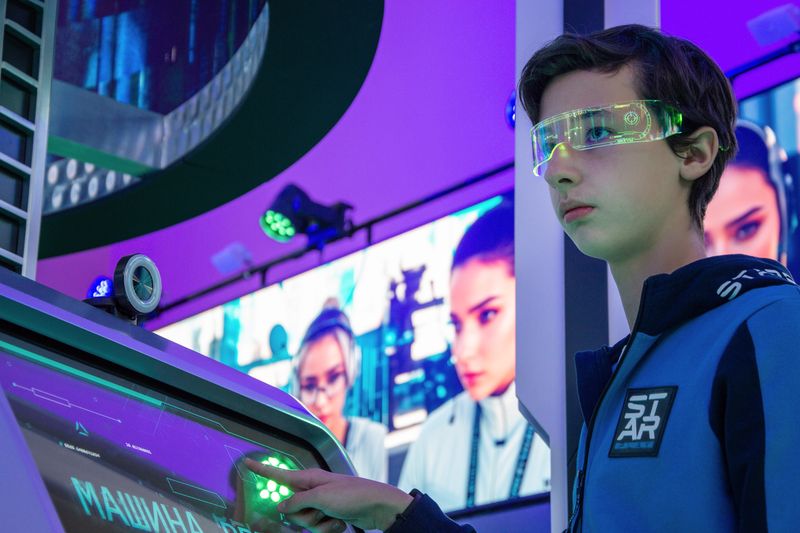
If Meta owns the "lifestyle" segment, Xreal has firmly planted its flag in the "spatial computing" territory. The Xreal Air 3 Ultra, released earlier this year, is designed for those who want a theater in their pocket. Unlike the Meta frames, these are true AR glasses equipped with dual Micro-OLED displays that project a massive, virtual 120-inch screen in front of the wearer.
The 2026 Ultra model has solved the bulkiness issues of previous years. They are now light enough to wear for a three-hour flight without discomfort. With 6-degrees-of-freedom (6DoF) tracking, the Xreal Air 3 Ultra allows users to pin virtual windows in physical space. You can have a YouTube screen hovering over your kitchen stove while a Slack window sits on your refrigerator.
The trade-off remains the tether. While Xreal has improved its wireless "Beam" technology, for maximum performance, you still benefit from a wired connection to a phone or laptop. For the professional who travels or the gamer who wants an immersive experience, Xreal is currently outperforming Meta in sheer visual capability.
Even Realities G1: The Minimalist HUD

A surprise contender that has gained massive traction in 2026 is the Even Realities G1. While Meta focuses on cameras and Xreal focuses on displays, Even Realities focuses on "digital serenity." These glasses are designed for the professional who needs information without distraction.
The G1 features a monochrome, high-contrast green HUD that is visible only to the wearer. It doesn’t try to show you movies. Instead, it provides turn-by-turn navigation, real-time teleprompter capabilities for public speaking, and subtle notification filters.
The design philosophy here is "analog first." The frames are exceptionally thin—nearly indistinguishable from high-end designer prescription glasses. For users who are wary of the privacy implications of Meta’s front-facing cameras, the G1 is an attractive alternative, as it focuses entirely on the "inward" experience of the user rather than capturing the "outward" world.
Solos AirGo 4: The Audio-First AI Specialist

Solos has carved out a niche by perfecting the "modular" smart glass. The AirGo 4 allows users to swap the "smart" temples (the arms of the glasses) between different frame styles, including high-fashion, sports, and blue-light-blocking frames.
In 2026, Solos has doubled down on AI-driven health and productivity. The AirGo 4 features a dedicated "Whisper" microphone system that captures voice commands even in gale-force winds or crowded subways. Its primary competition with Meta lies in the AI assistant space. Solos has opted for an open-AI architecture, allowing users to choose between ChatGPT, Claude, or Google Gemini as their primary assistant.
For those who prioritize battery life, the Solos AirGo 4 is a clear winner. Because it lacks a power-hungry camera or display, it can easily last 15 to 18 hours on a single charge, whereas the Meta Ray-Bans often require a mid-day top-off in their charging case after heavy AI use.
Snap Spectacles 5: The Developer’s Dream

Snapchat’s latest foray into hardware, the Spectacles 5, represents a different vision of the future. While Meta is moving toward the mass market, Snap has focused on the "creator-developer" ecosystem. These glasses feature a wide field-of-view (FoV) AR display and are powered by the Snap OS.
The Spectacles 5 are notably chunkier than the Ray-Ban frames, but they offer hand-tracking capabilities that Meta currently lacks. This allows for interactive AR gaming and "Lenses" that actually interact with the physical world in high fidelity.
The "rising" status of the Spectacles 5 comes from their social connectivity. For the younger demographic that lives in the Snap Map and uses AR Lenses daily, these glasses provide an experience that the Meta Ray-Bans simply cannot replicate with audio alone. They turn the world into a playground, though the 45-minute active battery life remains a significant hurdle for general daily use.
Technical Comparison: Camera and Privacy

When comparing these models in 2026, the camera remains the most contentious feature. Meta’s Gen 3 uses a highly visible LED ring to signal recording, a design choice that has become the industry standard for "conspicuous capture."
The Xreal and Even Realities models have moved in a different direction. Xreal uses its cameras primarily for spatial mapping rather than social recording, while the Even Realities G1 omits the camera entirely to appeal to the privacy-conscious professional. If your goal is to document your life hands-free, Meta is the clear choice. If your goal is privacy and data security, the competitors offer more specialized "camera-less" or "map-only" configurations that are more socially acceptable in sensitive environments.
Audio Quality and Spatial Sound

Audio has become the "silent" battlefield of smart glasses. Meta’s custom-built speakers in the Gen 3 Ray-Bans provide surprisingly deep bass and excellent leak prevention, meaning people standing next to you can’t hear your music.
However, the Solos AirGo 4 has introduced "Directional Audio 2.0," which uses bone conduction elements alongside traditional speakers to provide a more immersive experience for the wearer while maintaining total silence for bystanders. Xreal also provides excellent spatial audio, but because their glasses are often used for movies, the audio profile is tuned for cinema rather than the podcasts and phone calls that Meta and Solos prioritize.
Battery Life and the Charging Ecosystem
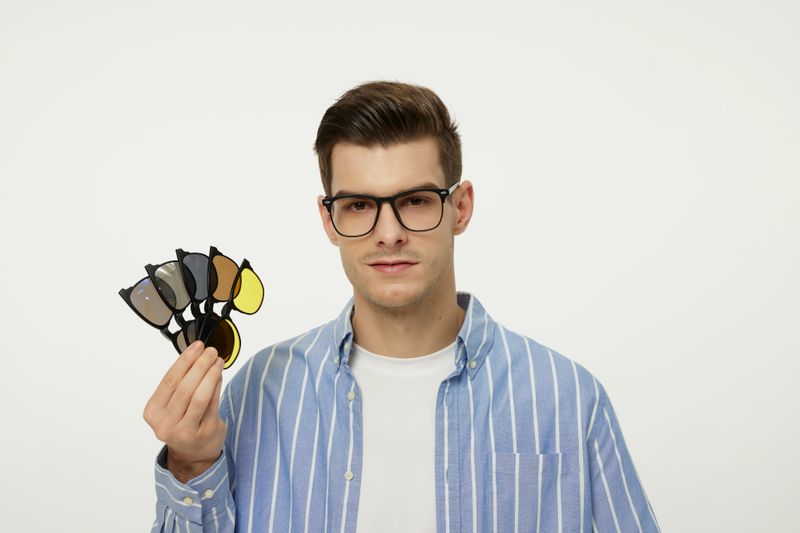
Battery life remains the "Achilles' heel" of the smart glasses industry in 2026. Meta has managed to optimize the Gen 3 to last about 4-5 hours of mixed-use, with the charging case providing an additional 30 hours.
Competitors like Solos and Even Realities, which eschew heavy video processing, are the only ones currently offering a "full-day" battery life. Xreal and Snap are still struggling with the physics of power; pushing light through AR lenses is energy-intensive. For most users, the Meta Ray-Ban "charging case" workflow has become the accepted compromise, mirroring how we use wireless earbuds like AirPods.
Aesthetics and Wearability

The primary reason Meta remains the leader in 2026 is simple: they look like glasses. The partnership with EssilorLuxottica allowed Meta to use genuine Ray-Ban styles like the Wayfarer and Aviator.
Rising competitors are catching up, however. The Even Realities G1 uses premium titanium frames that feel more "boutique" than Meta's plastic frames. Solos has partnered with various fashion designers to offer over 25 different frame shapes. We are finally moving away from the "tech-on-your-face" aesthetic toward a "fashion-first, tech-second" philosophy across the entire industry.
The Verdict: Which Smart Glasses Should You Buy in 2026?
Choosing the right pair of smart glasses in 2026 depends entirely on your primary "use case." There is no longer a single "best" pair, as each brand has specialized into a specific niche.
If you want the best all-around experience, Meta Ray-Ban Gen 3 is the winner. It offers the best balance of style, AI intelligence, and social integration. It is the perfect "entry-level" smart glass that doesn’t feel like a compromise.
If you are a media junkie or a mobile worker, the Xreal Air 3 Ultra is the superior choice. The ability to have multiple virtual monitors or a private cinema screen while commuting is a game-changer that the Meta glasses cannot match.
If you are a professional who values focus, the Even Realities G1 provides the most sophisticated HUD experience without the social baggage of a camera. It is the "Kindle" of smart glasses—focused, efficient, and unobtrusive.
If you are a "power user" of AI and need a device that lasts from morning until night, the Solos AirGo 4 is the workhorse of the group. Its modular design and open AI architecture make it the most flexible tool for those who aren't interested in the Meta or Snap ecosystems.
As we look toward the latter half of 2026 and into 2027, the competition will only intensify. With rumors of Apple and Samsung preparing their own "Lite" AR entries, the "smart glasses war" is just beginning. For now, Meta holds the crown, but the rising competitors are proving that the future of the face-worn computer is diverse, stylish, and incredibly powerful.
Where to buy
Prices change often, so check the current deal before you buy.
- The StandardSee current deal ↗
- Xreal Air 3 UltraSee current deal ↗
- Even Realities G1See current deal ↗
- Solos AirGo 4See current deal ↗
- Snap Spectacles 5See current deal ↗
- Technical ComparisonSee current deal ↗
- Audio Quality and Spatial SoundSee current deal ↗
- Battery Life and the Charging EcosystemSee current deal ↗
- Aesthetics and WearabilitySee current deal ↗
- The VerdictSee current deal ↗


