Top 5 Retro Handheld Gaming Consoles Under $150
The landscape of retro handheld gaming has shifted dramatically as we move through 2026. What used to be considered "premium" performance—such as smooth PlayStation 2 and GameCube emulation—has finally trickled down into the sub-$150 price bracket. This democratization of hardware means that gamers no longer need to spend upwards of $300 to enjoy a library spanning four decades of gaming history.

Our picks at a glance5 products




Today’s market is flooded with options, but not all handhelds are created equal. Some prioritize raw power, while others focus on pocketability, screen fidelity, or the "feel" of original hardware. For the discerning gamer looking to maximize their investment, the $150 threshold represents the ultimate "sweet spot." In this range, you move past the toy-like entry-level devices and into the realm of serious machines with high-quality displays, hall-effect joysticks, and robust community firmware support.
Whether you are a seasoned collector or a newcomer looking to relive the 16-bit era, these are the top five retro handheld gaming consoles currently dominating the market for under $150.
Retroid Pocket 4 (Standard Edition)
The Retroid Pocket 4 remains the gold standard for performance in the mid-range category. While its "Pro" sibling often grabs the headlines for high-end enthusiasts, the standard edition has become the best-kept secret for budget-conscious gamers in 2026. Powered by a MediaTek Dimensity 900 chipset and paired with 4GB of LPDDR4x RAM, this device handles nearly the entire 6th-generation console library with surprising ease.
The design language of the Retroid Pocket 4 is a love letter to the late 90s, offering a sleek, horizontal form factor that fits comfortably in the hands for extended play sessions. Its 4.7-inch touch screen provides a 750x1334 resolution, which results in a high pixel density that makes retro sprites look incredibly sharp. One of the standout features of this device is its inclusion of Hall Effect analog sticks as a standard. These sensors use magnets rather than physical contact points, virtually eliminating the "stick drift" that plagued older handhelds and modern mainstream consoles alike.
Running on a refined version of Android 13, the Retroid Pocket 4 offers more than just gaming. It serves as a full-featured multimedia device, capable of running modern Android games, streaming via Xbox Cloud Gaming or PS Remote Play, and housing a massive library of movies and music. For under $150, the Retroid Pocket 4 is the definitive choice for the gamer who wants a "do-it-all" device that doesn't compromise on build quality or thermal management.
Anbernic RG40XX H

Anbernic has long been a titan in the retro space, and the RG40XX H is perhaps their most refined horizontal handheld to date. The "H" in the name stands for horizontal, providing a classic layout that mimics the ergonomics of a modern controller. What sets this device apart from its predecessors is the beautiful 4-inch IPS display. While many budget handhelds stick to a 3.5-inch screen, that extra half-inch makes a world of difference for systems like the Super Nintendo or the Sega Genesis, where every pixel counts.
The RG40XX H utilizes the H700 quad-core processor, which has become a staple for reliability in 2026. It is perfectly tuned for everything up to the Dreamcast and PlayStation 1, with a high degree of success in the Nintendo 64 and PlayStation Portable (PSP) libraries. Anbernic’s commitment to build quality is evident here; the buttons have a satisfying "thunk," and the d-pad is widely considered one of the best in the business for fighting games and precision platformers.
Software versatility is another strong suit for the RG40XX H. While the stock Linux-based OS is functional and user-friendly, the device has a massive community following. Third-party developers have created custom firmware that unlocks better performance and more aesthetic UI layouts, allowing users to tailor their experience. If you value a premium in-hand feel and a gorgeous screen for 2D gaming, the RG40XX H is a top-tier contender.
Miyoo Mini Plus
If portability is your primary concern, the Miyoo Mini Plus is the undisputed king of the "pocketable" category. Despite being one of the more affordable options on this list, it boasts a cult following that rivals much more expensive machines. The vertical form factor is a nostalgic nod to the original Game Boy, but the internal hardware is vastly more capable.
The Miyoo Mini Plus features a 3.5-inch laminated screen with vibrant colors and excellent viewing angles. It is designed primarily for 8-bit and 16-bit gaming, though it handles the entire PlayStation 1 library effortlessly. What truly elevates the Miyoo Mini Plus is the "OnionOS" custom firmware developed by the community. OnionOS transforms the device, adding features like "Game Switcher," which allows you to jump between multiple active games instantly, and an "Auto-Resume" function that lets you power down the device and return exactly where you left off in seconds.
The Miyoo Mini Plus also includes built-in Wi-Fi, enabling RetroAchievements and Netplay for local multiplayer sessions. While it lacks the raw power to play GameCube or PS2, its charm lies in its simplicity and the sheer joy of having thousands of classic titles in a device that fits in a shirt pocket. In 2026, it remains the best value proposition for anyone who wants a dedicated "pick up and play" machine for their daily commute.
TrimUI Smart Pro

The TrimUI Smart Pro is the underdog of 2026, offering a unique design that fills the gap between a budget handheld and a premium mobile console. It features a stunning 4.96-inch IPS display with a 1280x720 resolution, making it one of the largest and clearest screens available for under $150. The design is heavily inspired by the PlayStation Vita, featuring a slim profile and comfortable curves that make it an excellent choice for long-form RPGs.
Under the hood, the TrimUI Smart Pro uses an Allwinner A133P chip, which provides a surprisingly smooth experience for PSP and Arcade titles. Because of the 16:9 aspect ratio of the screen, PSP games look native and sharp, filling the entire display without the black bars commonly found on 4:3 devices. The device also features customizable RGB lighting around the joysticks, adding a modern "gamer" aesthetic that many find appealing.
One of the most praised aspects of the TrimUI Smart Pro is its power efficiency. It manages to deliver impressive battery life, often exceeding 6 to 7 hours of continuous gameplay depending on the system being emulated. For users who prioritize screen real estate and a modern, sleek aesthetic, the TrimUI Smart Pro provides a premium visual experience that punches far above its weight class.
Powkiddy RGB30
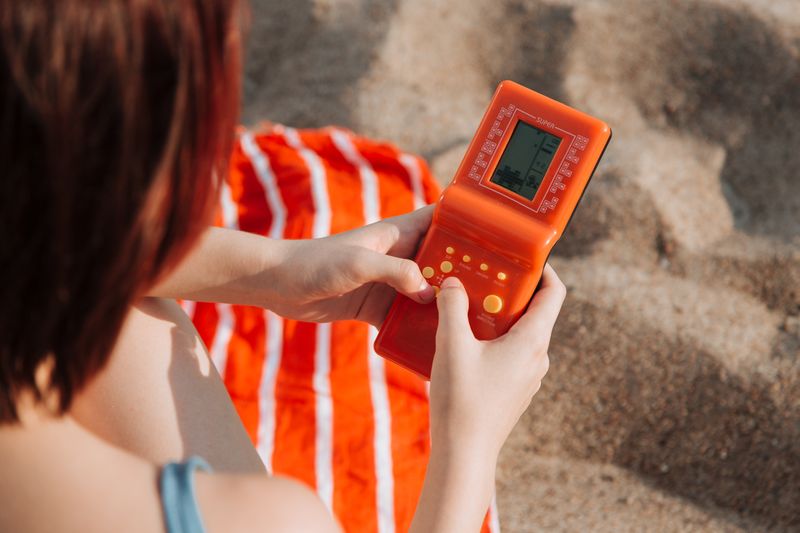
The Powkiddy RGB30 is a niche device that has found a permanent home in the hearts of retro enthusiasts due to one specific feature: its unique 1:1 aspect ratio screen. The 4-inch, 720x720 square display is perfectly suited for systems that were never meant for widescreen televisions. For Game Boy, Game Boy Color, and Neo Geo Pocket Color, the RGB30 offers an unmatched viewing experience, displaying games in a large, bright format that feels more "authentic" than a traditional rectangular screen.
This device isn't just a one-trick pony, however. The square screen also provides a fantastic "integer scale" for home consoles like the SNES and NES, resulting in crisp, sharp pixels without the blurring that occurs when scaling to other resolutions. The RGB30 is powered by the RK3566 chipset, a reliable workhorse in 2026 that handles most N64 and Dreamcast games with minimal tweaking.
The RGB30 is particularly popular among the "tinkerer" crowd. It runs on various Linux distributions, allowing for deep customization of shaders and overlays. While the build quality is more utilitarian than the Anbernic or Retroid offerings, the screen alone makes it a mandatory recommendation for anyone who spends most of their time playing classic handheld titles. It is a specialized tool that does its specific job better than any other device on the market.
How to Choose the Right Handheld for Your Needs
Selecting the right console in 2026 involves balancing your performance expectations against your ergonomic preferences. If you are looking for a device that can act as a primary gaming machine, the Retroid Pocket 4 is the clear winner due to its raw power and Android ecosystem. It is the only device on this list that can reliably touch the higher-end libraries of the early 2000s.
However, if your goal is to relive the 80s and 90s, power is less important than screen quality and portability. The Miyoo Mini Plus and the Anbernic RG40XX H offer a more focused, "distraction-free" experience. These Linux-based machines boot directly into your game library, making them ideal for quick gaming bursts.
You should also consider the community support for each device. In the world of retro gaming, the software is just as important as the hardware. Consoles like the Miyoo Mini Plus and the Powkiddy RGB30 benefit from thousands of hours of community development, resulting in custom operating systems that are more intuitive and feature-rich than the software provided by the manufacturers.
The Future of Retro Gaming in 2026
As we look at the current state of the market, it is clear that the "Golden Age" of retro handhelds is here. The competition between brands like Anbernic, Retroid, and Powkiddy has driven prices down while forcing hardware quality up. Features like Wi-Fi for cloud saves, Bluetooth for external controllers, and high-resolution IPS panels are now standard expectations rather than luxury additions.
The $150 price point has become the most competitive segment of the market. It represents a transition from "disposable" tech to "durable" tech—devices that are built to last and provide hundreds of hours of entertainment. Whether you are scaling the peaks of Mt. Chimney in Pokémon, navigating the corridors of Zebes in Metroid, or taking the checkered flag in Mario Kart, these five handhelds ensure that the history of gaming remains accessible, portable, and more vibrant than ever before.
Conclusion
The evolution of retro handheld gaming in 2026 has provided us with an incredible array of choices under $150. From the high-performance capabilities of the Retroid Pocket 4 to the specialized square screen of the Powkiddy RGB30, there is a device tailored to every specific type of gamer. By prioritizing what matters most to you—be it power, screen size, or pocketability—you can find a console that brings your favorite childhood memories back to life with modern convenience. These top five picks represent the pinnacle of value, performance, and craftsmanship in the current market, proving that you don't need to break the bank to carry the history of gaming in your pocket.
Where to buy
Prices change often, so check the current deal before you buy.
Links go to Amazon. As an Amazon Associate we earn from qualifying purchases.