Top 5 Multi-Port GaN Fast Chargers for Laptops and Phones
In the fast-evolving landscape of 2026, our reliance on mobile technology has reached an all-time high. From high-performance laptops and foldable smartphones to wearable health trackers and wireless earbuds, the average professional travels with at least three to four devices that require daily charging. The era of carrying a bulky, individual power brick for every single gadget is officially over.

Our picks at a glance5 products


The catalyst for this revolution is Gallium Nitride (GaN) technology. Unlike traditional silicon-based chargers, GaN chargers use a semiconductor material that conducts electrons more efficiently and withstands higher voltages. This efficiency allows manufacturers to pack more power into significantly smaller housings while generating less heat. As we move through 2026, GaN technology has matured, offering more intelligent power distribution and higher wattage than ever before.
Choosing the right multi-port charger is no longer just about picking the one with the most holes. It is about understanding Power Delivery (PD) protocols, Programmable Power Supply (PPS) support, and how total wattage is shared across multiple ports. In this guide, we break down the top five multi-port GaN fast chargers currently dominating the market for their reliability, safety features, and sheer charging speed.
Anker 747 GaNPrime 150W Charger
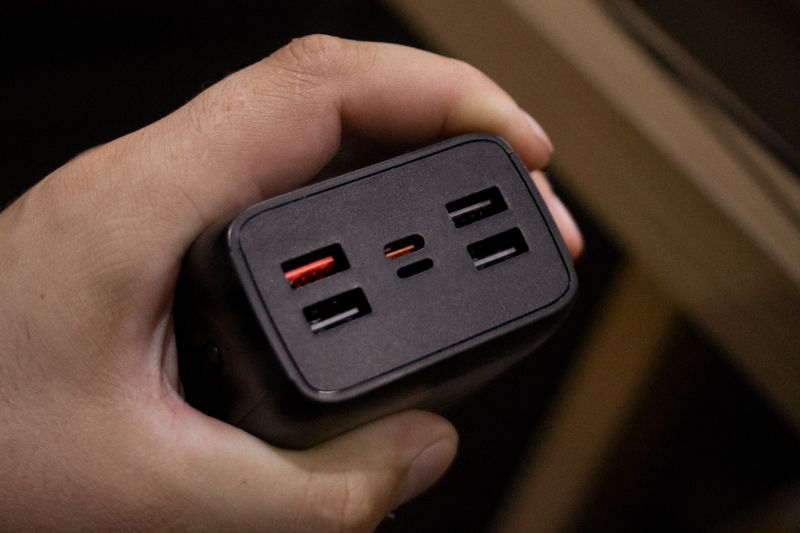
Anker has long been a leader in the charging space, and the 747 GaNPrime 150W remains the gold standard for power-hungry users. This charger is designed for the modern professional who needs to keep a high-end workstation laptop, such as a MacBook Pro or a Dell XPS, running alongside a suite of mobile devices.
The standout feature of the Anker 747 is its proprietary GaNPrime technology. This system incorporates PowerIQ 4.0, which features dynamic power distribution. In 2026, we see many chargers that have fixed outputs for specific ports, but the Anker 747 intelligently detects the power requirements of each connected device in real-time. If your laptop battery is low, it prioritizes more juice to the primary USB-C port; as the laptop fills up, it shifts the surplus power to your phone or tablet.
Safety is also a primary focus with Anker’s ActiveShield 2.0. This technology monitors the temperature of the charger over 3 million times per day to prevent overheating. Despite its massive 150W output, the device is roughly 38% smaller than a standard 140W single-port silicon charger, making it an essential companion for digital nomads who value every square inch of their carry-on luggage.
UGREEN Nexode Pro 160W GaN Charger

UGREEN has rapidly ascended the ranks to become a top-tier competitor in the power delivery market. The Nexode Pro 160W is a testament to the brand's commitment to high-performance engineering. Featuring four ports—three USB-C and one USB-A—this charger is built to handle an entire ecosystem of devices simultaneously.
What sets the Nexode Pro apart is its support for the latest PD 3.1 protocol on its primary port. This allows for a dedicated 140W output, which is the specific requirement for fast-charging the most recent 16-inch laptops released in 2026. When multiple ports are in use, the 160W total capacity ensures that even with a laptop connected, you still have plenty of overhead to charge a smartphone at its maximum 25W or 45W fast-charging rate.
The design of the Nexode Pro 160W is sleek and industrial, featuring a high-quality metallic finish that dissipates heat effectively. It also utilizes the Airpyra tech, a stacking architecture that reduces the overall size of the internal components. For users who need a single "hub" at their desk or in a hotel room that can handle everything from a gaming laptop to a pair of noise-canceling headphones, the Nexode Pro is an unbeatable choice.
Satechi 200W USB-C 6-Port GaN Charger
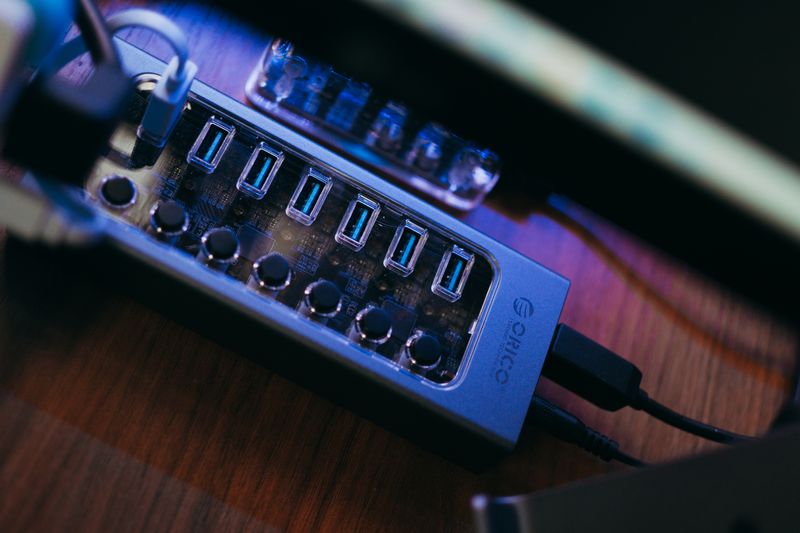
For the power user who refuses to compromise, the Satechi 200W USB-C 6-Port GaN Charger is the ultimate desktop powerhouse. While other chargers on this list are designed for portability, this Satechi unit is aimed at users with extensive setups who need to eliminate a "birds nest" of cables from their workspace.
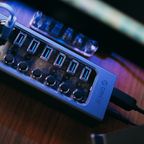
With six dedicated USB-C ports and a total output of 200W, this device can support two laptops at 65W each while still providing ample power for two tablets and two smartphones. It is one of the few chargers on the market in 2026 that successfully manages six high-speed connections without significant thermal throttling. Satechi has achieved this through a specialized internal layout that maximizes airflow and uses high-grade GaN components to keep conversion losses to a minimum.
The charger comes with a detachable power cord and a convenient stand, allowing it to sit vertically on a desk to save space. It is fully CE and ETL certified, providing the peace of mind that comes with knowing your $5,000 worth of electronics are protected against over-voltage and short-circuiting. If you are a creative professional—such as a video editor or photographer—who needs to keep multiple cameras, laptops, and monitors powered up, this is the hub for you.
Baseus GaN6 Pro 140W Fast Charger
Baseus has carved out a niche for itself by offering high-end specifications at a price point that is accessible to the average consumer. The GaN6 Pro 140W is the latest iteration of their popular charging line, and it brings several 2026-era refinements to the table.
The GaN6 Pro is particularly notable for its slim profile. Baseus has utilized a fifth-generation GaN chip that allows the charger to be surprisingly thin, making it much more comfortable to plug into crowded power strips or recessed wall outlets. It features two USB-C ports and one USB-A port, providing a balanced mix for those who still use legacy cables for certain accessories.
One of the most impressive aspects of the Baseus GaN6 Pro is its inclusion of a high-quality 240W-rated USB-C to USB-C cable in the box. Many manufacturers omit the cable to save costs, but Baseus ensures that users can actually achieve the 140W speeds they are paying for right out of the box. The charger also features BPS II (Baseus Power Split) technology, which minimizes the "reconnection" blink that often happens with multi-port chargers when a new device is plugged in. This ensures a stable, uninterrupted stream of power to sensitive electronics.
Nomad 130W GaN Charger

Nomad is a brand synonymous with premium aesthetics and rugged durability, and their 130W GaN Charger is no exception. While it offers slightly less total wattage than the Satechi or UGREEN models, it wins on build quality and portability. This charger is designed for those who appreciate the "everyday carry" (EDC) philosophy—it is compact, beautiful, and built to last.
The Nomad 130W features three USB-C ports, making it a "USB-C only" purist's dream. In 2026, as USB-A continues to fade into obsolescence, Nomad has leaned into the future by focusing entirely on the smaller, faster connector. The charger is capable of delivering up to 100W from a single port, which is more than enough for the vast majority of professional laptops, including the latest MacBook Air and mid-range pro models.
The housing is made from a high-density, scratch-resistant polycarbonate with a matte finish that resists fingerprints. Nomad also includes a Pro-Map power distribution guide, which clearly explains exactly how much wattage each port will receive based on which combination of ports is being used. This transparency is refreshing in a market where power distribution can often feel like a guessing game. It is a premium product for the user who wants their charger to look as good as the devices it is powering.
Why GaN is the Standard in 2026
The transition from silicon to Gallium Nitride was one of the most significant shifts in consumer electronics over the last decade. In 2026, the benefits of GaN are more apparent than ever. First, there is the matter of environmental impact. Because GaN chargers are more efficient, less energy is wasted as heat during the conversion process. On a global scale, this leads to a measurable reduction in energy consumption for the billions of devices we charge daily.
Secondly, the reliability of these devices has increased. Early GaN models sometimes struggled with heat management when pushed to their limits, but the current generation of chargers features sophisticated thermal sensors and advanced heat-sync materials. This ensures that even when you are charging a laptop and a phone at full speed, the charger remains safe to the touch.
Finally, the convergence of charging standards has made these multi-port bricks essential. With the universal adoption of USB-C across almost all platforms—including smartphones, tablets, laptops, and even hand-held gaming consoles—a single high-quality GaN charger is often the only power source a person needs for a week-long trip.
How to Choose the Right Charger for Your Needs
When selecting from these top-tier options, consider your specific device lineup. If you own a high-powered gaming laptop that requires 140W or more via USB-C, the UGREEN Nexode Pro or the Anker 747 are your best bets, as they support the PD 3.1 standard required for those speeds.
If your setup is more static—perhaps a home office where you need to charge a laptop, a tablet, a phone, and a watch—the Satechi 200W offers the port density and total power overhead to handle everything at once without slowing down. For those who prioritize travel and need something that fits into a pocket or a small tech pouch, the Baseus GaN6 Pro or the Nomad 130W provide the best balance of size and performance.
Always look for PPS (Programmable Power Supply) support if you are a Samsung or Google Pixel user, as this protocol is necessary for their specific "Super Fast Charging" standards. Fortunately, all five of the chargers mentioned in this guide support PPS, ensuring compatibility across the entire spectrum of 2026's flagship mobile devices.
Conclusion
The evolution of GaN technology has fundamentally changed how we interact with our devices. We are no longer tethered to specific, proprietary chargers or forced to wait hours for a full battery. The five chargers highlighted here—Anker, UGREEN, Satechi, Baseus, and Nomad—represent the pinnacle of charging technology in 2026. By investing in a high-quality multi-port GaN charger, you are not just buying a power brick; you are buying the convenience of a simplified, high-speed digital life. Whether you are at a desk, in a coffee shop, or 30,000 feet in the air, these chargers ensure that your essential tools are always ready to perform.
Where to buy
Prices change often, so check the current deal before you buy.
Links go to Amazon. As an Amazon Associate we earn from qualifying purchases.